

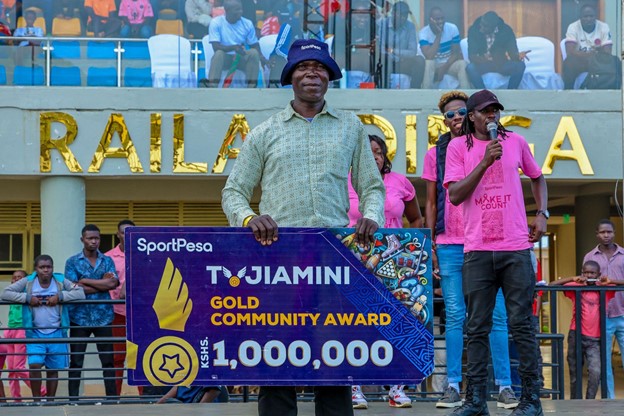
Sometimes progress does not arrive as a policy or a promise. Sometimes it arrives as clean water, rising from the ground, changing what is possible.
In Komollo, a rural community in Homa Bay County, water decides everything. It determines whether crops survive the dry months, whether children attend school on time, and whether women can earn a living without risking their health.
For women with disabilities and widows here, the daily search for water has long been the heaviest burden.
Many walk long distances over rough terrain, carrying heavy containers for household use and for the small farms that sustain their families. The journey costs hours each day and often worsens existing health conditions. Farming suffers. Income shrinks. The cycle repeats.
That reality is what the Disability Is Not Inability Na Wamama Initiative set out to change.
The grassroots group works with 36 women with disabilities and widows across Homa Bay County, supporting more than 180 family members. Its focus is practical. Help women earn a living through farming and small agribusiness. Build dignity through independence. Reduce reliance on aid.
But progress kept stalling at the same point. Water.
The group’s main community farm sits on public land in Komollo. Without a reliable supply, harvests depended on rainfall that could not be trusted. During dry spells, crops failed. Time spent fetching water replaced time spent tending fields or running small businesses.
For women with disabilities, the strain was sharper. Physical barriers turned a basic necessity into a daily test of endurance.
This year, the group received a breakthrough.
The initiative won the Tujiamini Gold Award, receiving one million Kenyan shillings in funding. The prize will be used to drill a community borehole on the farm, providing free and equal access to clean water for the surrounding community, with priority for people with disabilities.
It is a simple intervention with far-reaching impact.
A borehole means crops can be planted on schedule and maintained through dry seasons. It means less time walking and more time producing. It means better health outcomes and higher yields. It also means dignity.
Access to water is often discussed in abstract terms. In Komollo, it is deeply personal.
Widowed women who depend on farming to feed their households will be able to irrigate vegetables consistently and sell surplus produce. Women with mobility challenges will no longer need to rely on others to fetch water or make dangerous journeys themselves. Children will see their caregivers less exhausted and more present.
The borehole will also serve the wider community, reducing pressure on distant water points and easing tensions during drought periods. Because it sits on public land, access will not depend on membership or ability to pay.
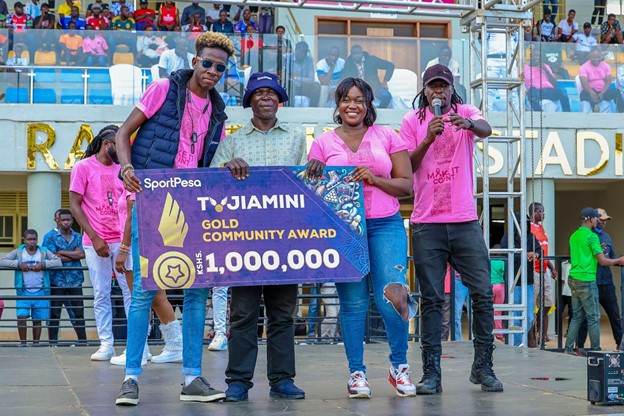
The award signals something else as well. Recognition.
For years, women with disabilities in rural Kenya have been excluded from development conversations, often treated as dependents rather than producers. The Disability Is Not Inability Na Wamama Initiative challenges that narrative by centering capability, not limitation.
Their work combines farming, agribusiness training, and collective action. The borehole strengthens all three.
“This is not just about water,” Jacob Amullo said. “It is about removing the barrier that has kept us behind.”
In Komollo, the sound of drilling equipment will soon replace the long walk for water. For dozens of families, that sound marks the beginning of stability.