

Talent sponsorship is not only for people already known by the public. Sometimes, the person who needs support most is still training in a small space, performing for a local audience, building a portfolio or mentoring others quietly.
At Tujiamini, we believe talent deserves a fair chance to grow. That is why we support eligible applicants who can show real ability, clear need and a practical reason for support.
Talent sponsorship is support given to a skilled person, group or creative project so the talent can grow. The support may come through equipment, training resources, production help, exposure, services or an award package.
Talent sponsorship can support musicians, dancers, artists, photographers, performers, gamers, content creators and other gifted applicants. It can also support people who use their talent to mentor others or build community value.
The strongest applications do not only say, “I am talented.” They show proof, explain the need and make it clear how support will create progress.
Kenya has talented people in music, dance, theatre, gaming, art, photography, sport and community performance. Many already have skill, but they may lack tools, safe training spaces, visibility or professional support.
Talent sponsorship helps close that gap. It can turn informal effort into a stronger opportunity for growth.
At Tujiamini, we look for applicants who can explain both the talent and the need. A clear story makes the application easier to understand.
Talent sponsorship can benefit people whose work depends on skill, consistency and access to better support. This can include creatives, performers, athletes, teams, mentors and community-focused talent projects.
The important thing is not only the category of talent. The applicant must also show what support is needed and why it matters now.
Musicians and performers may need production support, instruments, recording resources, rehearsal space or performance opportunities. A strong application should show previous work and progress.
Videos, recordings, photos and audience feedback can help. They show that the talent is active, not only imagined.
Dancers may need training equipment, safe practice spaces, costumes, mats, mentorship or performance exposure. This is especially important where the talent also supports younger learners.
Tujiamini’s story on art sponsorship and Mzushiafrica’s breakdancing journey shows how support can help talent and mentorship grow together.
Gaming and esports talent may need devices, connectivity, training access, competition support or visibility. A good application should show discipline, rankings, tournament participation or consistent work.
Esports is still growing in Kenya. That means applicants should explain their talent clearly and avoid assuming reviewers already understand the space.
Artists, photographers and creators may need tools, software, production equipment, exhibition support or media visibility. Their proof should be visual and easy to review.
A portfolio can be more powerful than a long explanation. It shows style, effort and growth in one place.
Theatre groups and community performers may need costumes, rehearsal resources, venue support or production help. They should explain who participates and what the performance means to the community.
Tujiamini has highlighted talent beyond sport, including performing arts, gaming and music, through stories such as Beyond football.
Read also: Beyond football: exploring Tujiamini’s support for diverse talent
Talent sponsorship should solve a clear problem. The best request is not always the biggest request.
Some applicants need tools. Others need exposure, safety, production help or a platform that helps people take their work seriously.
Equipment can include cameras, instruments, costumes, mats, protective gear, software, art materials or performance tools. These items can help talent become more consistent.
If equipment is the main need, say exactly what is required. A clear list is easier to support than a vague request.
Some talents need space and safety more than cash. A dancer may need mats, while a performer may need rehearsal space.
If the support will help others train safely, explain that clearly. Community value can strengthen the application.
Production support may include recording, photography, videography, stage setup, lighting, transport or event preparation. This helps talent move from practice to public presentation.
Applicants should explain what the final output will be. A sponsor should understand what the support will produce.
Some talented people already have skill but lack visibility. Media exposure can help their story reach a wider audience.
Visibility matters when it opens doors. Applicants should explain what attention can change for their next step.
At Tujiamini, we support eligible applicants through structured award categories. These categories help us review different needs more clearly.
Not every talent applicant needs the same award route. A community mentor, a solo creative and a grassroots football team may all need different support.
Before applying, choose the category that fits your need. Then prepare proof that helps us understand your story.
Our Gold Community Project Awards are suited to larger community-focused needs. This may fit talent projects that support more than one person or create wider community value.
A strong Gold application should explain the project clearly. It should also show who benefits and how the support will be used.
Our Silver Awards can support meaningful products or services for individuals, teams or groups. This may fit applicants who need practical support to keep growing.
A strong Silver application should be specific. It should show the talent, the need and the expected outcome.
Our Bronze Awards support smaller but important needs. A direct request can still matter if it helps the applicant move forward.
Bronze applicants should still prepare proof. A smaller request should not be a careless request.
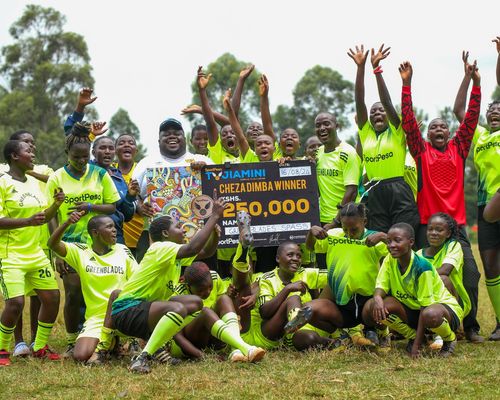
Our Cheza Dimba Awards are linked to grassroots football teams. This category is not for every talent applicant.
Football teams should check the requirements before applying. Region, team status and competition rules matter.
Apply through the official Tujiamini application page.
Talent sponsorship becomes clearer when you see it in action. Tujiamini has supported stories that go beyond the usual idea of sponsorship.
Mzushiafrica’s breakdancing story is a good example of talent support that also touches mentorship. The support was connected to training resources and a safer environment for juniors learning from him.
The Beyond Football story also shows how talent can appear in different forms. It mentions performing arts through Titans drama club, gaming through Shirley Ndirangu and music through Franklin Ireri.
These stories matter because they widen the meaning of talent. They show that talent is not limited to one field, one sport or one stage.
A talent sponsorship application should be easy to understand. The reviewer should quickly see who you are, what you do and what support you need.
Do not hide the main request inside a long story. Make the need clear, then support it with proof.
Name the talent directly. Say whether you are a dancer, musician, gamer, artist, photographer, performer, creator or mentor.
Then explain your current level. This helps us understand where you are in your journey.
Proof is important because it gives the application weight. Use videos, photos, portfolios, performances, testimonials, competition records or media mentions.
Do not wait until the end to show proof. Make it easy for reviewers to see your work.
Say what you need in practical terms. Do you need equipment, production support, training resources, media exposure or services?
Avoid writing only, “I need sponsorship.” That does not tell us how to help.
Explain what the support will make possible. Will it help you train safely, produce better work, mentor others or reach a wider audience?
A strong application connects support to progress. That makes the request more meaningful.
Match your request to the right Tujiamini category. A community talent project may not fit the same route as an individual creative.
Before submitting, read our Tujiamini sponsorship rules. This helps you avoid applying under the wrong category.
Many talented people have strong stories but weak applications. The issue is often not the talent; it is how the request is presented.
A good application should be clear, specific and supported by evidence. It should not make the reviewer guess.
Talent needs proof. Videos, photos, performances, portfolios and testimonials help people understand your work.
A strong claim becomes stronger with evidence. Show what you have already done.
A request becomes weak when the support needed is unclear. Say exactly what you need and why.
If you need a camera, say that. If you need mats, transport or studio time, say that clearly.
The wrong category can delay or weaken a strong application. Each Tujiamini award route has a purpose.
Read the rules before applying. Then choose the category that best fits your need.
Some talent applications become stronger when they show impact beyond one person. This is especially true for mentors, groups and community-based creatives.
If your talent supports others, explain that. Show who benefits and how.
Talent sponsorship should lead to action. The goal is not only to define support, but to help eligible applicants prepare better.
At Tujiamini, we want applicants to submit clear stories with real proof. The strongest applications usually explain the talent, the support needed and the expected outcome.
If you are ready to apply, start by choosing the right category. Then prepare your proof before submitting.
Choose the Tujiamini category that best matches your talent and support need.
Talent sponsorship is support given to a skilled person, group or creative project. It can include equipment, services, media exposure, training resources, production help or award support.
Eligible applicants may include creatives, performers, artists, musicians, dancers, gamers, creators or talent groups. Applicants should check the rules before applying.
No, talent sponsorship is not only for famous people. A strong applicant can be someone with skill, proof, discipline and a clear need for support.
Prepare videos, photos, portfolios, testimonials, media mentions, performance records or examples of past work. The proof should make your talent easy to understand.
A dancer may apply if they fit the correct category and meet the rules. The application should show the talent, proof of work and the exact support needed.
Musicians and artists can apply where their need fits the eligible award category. They should prepare proof such as recordings, performances, portfolios or audience feedback.
The right category depends on the need. Gold may suit wider community projects, Silver may suit meaningful product or service support, and Bronze may suit smaller direct needs.
Start by identifying your support need and gathering proof. Then use the official Tujiamini application process and submit under the category that fits your case.
Talent sponsorship can help people move from effort to opportunity. It can support training, tools, exposure, production, mentorship and community growth.
At Tujiamini, we want talent applicants to be clear about what they do and what support they need. A strong application should show proof, purpose and the right category fit.
If your talent is ready for support, prepare your evidence before applying. Then use the official Tujiamini process to submit your application clearly and honestly.