

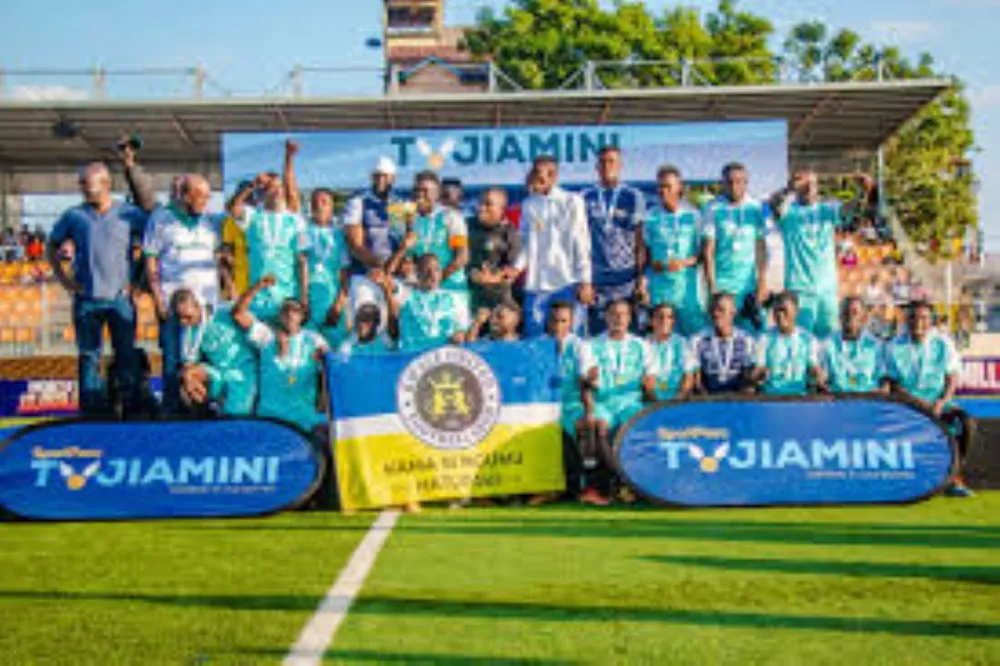
Sponsorship marketing is a strategic partnership in which a business contributes funds, products, services, or other benefits to an individual, team, event, organisation, or community program in exchange for predetermined marketing value. It is not just about putting your logo on their jersey or event banner, but about providing experiences, content, and valuable partnerships to engage your audience.
In Kenya, community and sports sponsorship marketing is an essential avenue for talent development while helping brands strengthen their relationships with the people they serve. This guide defines sponsorship marketing, explains how it works, outlines its various types and advantages, and shows how to create an effective sponsorship marketing strategy.
Learn more about Tujiamini and our role in supporting sports and talent development in Kenya.
READ ALSO: Measuring Sponsorship Impact: Metrics, KPIs & How to Measure Success
Sponsorship marketing is a type of marketing in which both the sponsoring brand and the sponsored property benefit from the agreement. The support can be direct monetary support, equipment, products, professional services, media exposure, promotional support, or other resources. The sponsored party can then provide branding rights, access to the audience, event appearances, content opportunities, marketing space, or other promotional opportunities.
Read the Tujiamini sponsorship rules and guidelines before applying because eligibility and award requirements can change.

Successful sponsorship marketing is usually developed in four phases. These are:
The first step is to identify a property that is suitable for the business's goals. It may be an athlete, a team, a tournament, an event, an organisation, the media, or a community initiative. It might be more valuable to have a smaller live sports event with a much more appropriate audience than a larger event with a much less appropriate audience. The key is to consider the audience, reputation, location, values, and potential reach of the opportunity before making a decision.
The sponsor and the sponsored party then reach an agreement regarding each party's contributions. This can include funding, equipment, transport, professional services, promotional support, branding rights, event appearances, or content opportunities. Having clear expectations is crucial, as both parties need to know what success will look like before a partnership.
Sponsorship activation is the point where the partnership becomes visible and interactive. Rather than just an apparel logo, a brand can use social media to create content, experiences for fans, contests, community events, athlete appearances, and other campaigns centered on the sponsorship. For example, a brand supporting a school sports event could pair the sponsorship with athlete interviews, social media content, and a community event. The sponsorship then transcends mere ad placement to become an experience.
The last step is to evaluate performance against the initial goals. Businesses can measure reach and engagement, brand awareness, website traffic, leads, sales, media exposure, or community impact, depending on the campaign.
Check out our sponsorship opportunities and apply today.
Depending on the property and objectives, there are several types of sponsorship marketing, including;
Sports sponsorship involves a support arrangement meant for an athlete, a team, a league, a tournament, a club, or a sports facility. It can be a good fit for grassroots teams and athletes in Kenya who need equipment, opportunities to compete, exposure, or other support.
Events sponsored include conferences, festivals, entertainment events, exhibitions, sporting events, and community events. Sponsors can get branding, a platform to address pressing issues, and an opportunity to engage the audience and gain promotional rights.
Businesses can sponsor community activities and causes that are directly aligned with their core ethical values. This can enhance community ties and enable the sponsor to demonstrate support for issues important to the target audience. For brands targeting local communities, this type of sponsorship can also create opportunities for meaningful engagement beyond traditional advertising.
Podcasts, digital publications, broadcasts, videos, and other media properties can be used to appeal to sponsors with relevant content for a specified audience. Media sponsorship can be useful when a brand wants to reach a clearly defined audience through content or media coverage.
Sponsorships don't always need to be paid. A business can offer equipment, transportation, technology, venues, professional services, and other resources. This can be very helpful when the sponsored organization has a specific operational or development need that can be met through products or services rather than direct funding.
Also Read: Types of sponsorship: examples, benefits and how they work
Sponsorship marketing can make a business more visible to people who are interested in the sponsored programs or activities. It can also help reinforce brand association when the brand and the sponsored property have a natural connection.
Some common benefits include:
● Increased brand awareness and visibility
● Direct access to a relevant audience
● Stronger brand association
● Community engagement
● Content and social media opportunities
● Public relations opportunities
● Customer engagement and loyalty
● Support for community or talent development
For a sponsorship to deliver these benefits, however, the partnership needs to be supported by a clear activation plan and measurable objectives.
A successful sponsorship marketing program will start with the business objective, not the sponsorship opportunity itself. Follow these points to create an effective one:
Determine goals for the business. It may be to raise brand awareness, acquire customers, engage in communities, build reputation, or promote or enter into a new market.
Think about the overlap in audiences between the sponsored property and the business's target audience. The more natural the connection among the audience, the property, and the brand, the more valuable the sponsorship becomes.
Evaluate the audience, reach, reputation, values, location, engagement, and cost of the sponsorship. Consider whether the profile matches your brand image.
Plan how the sponsorship will come to life beyond the terms of the initial contract. There are a variety of ways that sponsorship rights can be leveraged into quantifiable marketing activity, such as social media campaigns, community events, branded experiences, content, and athlete or participant engagement.
The sponsorship fee is just one of the costs. Other activation expenses, such as content creation, advertising, events, promotional materials, travel, and more, may also need to be budgeted for.
Set up important metrics before the campaign. This will help you see if the value of the partnership was realised. Depending on the objective, these could include audience reach, engagement, media mentions, website traffic, leads, sales, event attendance, or community outcomes.
Also Read: How to Measure Sports Sponsorship ROI
In sports sponsorship, Tujiamini creates shared value as we are designed around genuine needs and clear objectives. We provide support to Kenyan athletes, clubs, and others involved in sport, including professional equipment, coaching, facilities, and other resources. This has been especially significant at the grassroots level, where athletes and teams may have limited access to resources. Explore our sponsorship programme to understand the current categories and support available.
Businesses interested in partnerships and collaborations can also contact Tujiamini to discuss potential opportunities.
An ideal measurement chosen depends on the initial goal. Some brand-awareness campaigns emphasise impressions, reach, media mentions, and audience sentiment, while others may focus more on customer acquisition, including website traffic, leads, and conversions. Other helpful metrics include social media engagement, content views, event attendance, audience growth, media coverage, and community impact.
The important thing is to decide what success means before the sponsorship begins. This gives both parties a clearer way to evaluate whether the partnership delivered the expected value.
Before applying for a Tujiamini award, always read the terms and conditions and confirm the current requirements, deadlines and eligibility criteria.
This typically entails identifying an appropriate opportunity, agreeing on the exchange of value, activating the relationship, and tracking performance against stated goals.
Rewards can include brand recognition, audience engagement, stronger brand association, content development, public relations benefits, customer loyalty, and community goodwill.
Common types include sports sponsorship, event sponsorship, cause and community sponsorship, media and content sponsorship, and product or in-kind sponsorship.
A company needs to define its goals, understand its target audience, identify suitable sponsorship opportunities, plan the sponsorship activation, create a full budget, and establish measurable indicators for performance.
The primary difference between sponsorship and advertising is that the latter is payment for specific promotional exposure. In contrast, sponsorship is a broader partnership in which the sponsor supports a property and, in turn, receives agreed-upon rights and opportunities.
Sponsorship ROI depends on the original objective. A business can compare results such as sales, leads, website traffic, audience engagement, or measurable brand outcomes against the total cost of the sponsorship and its activation.
Sponsorship marketing is more than simply branding an event, team, or athlete with a company name. It can link brands with targeted audiences when planned correctly and can be a powerful opportunity for sports, talent, and communities. For Tujiamini, the sports and talent-supporting aspects align with community development initiatives. Visit our official website for the latest information on programmes, opportunities, events, applications, and current sponsorship requirements, since availability can change over time.
READ ALSO: Sponsorship program | Tujiamini by SportPesa